
 The Classroom
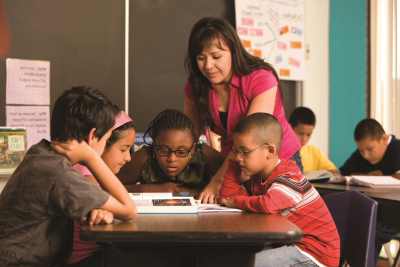
It is my philosophy that children need to be engaged and challenged by educators in order for true learning to take place. Up until the late 1990’s most students were accustomed to sitting silently in rows and columns while the teacher lectured, only participating when called upon. Today’s classrooms are a far cry from the sterile environment that once was. Classrooms are rich with visual stimuli including posters and literacy models. Students sit in groups and move through workstations using their collective abilities to reason through science problems, math problems, and help each other with spelling during reading and writing projects. I believe this this is the a great way for students to learn and as a future STEM educator I will be incorporating these principles into my future classroom.
Subject Matter Expertise
I believe it is the responsibility of every teacher to be well educated in all subject matter: literacy, mathematics, social studies, science, and technology. A teacher’s knowledge extends far past these subjects and they must also be aware of the stages of child development to develop lessons that are pedagogically sound and appropriate.
Excellence in Planning and Practice
A teacher must use their knowledge of child development to teach lessons that children are able to participate in and learn from. If lessons are too simple for the intended grade level, students lose focus because they lack the needed challenge. If lessons are too complex or exceed the scope of the students’ prior knowledge, students will lose focus, fall behind, or become frustrated. A teacher must be aware of this and develop lessons and activities that are rigorous and challenging while remaining pedagogically appropriate. This can be accomplished with the aid of technology such as Smart Boards, iPads, computers, and real-time scientific instruments that help bring these concepts into a medium “Digital Natives” are well accustomed to and further expand their technological and educational intelligence.
Student Growth through Effective Teaching
Each and every student has the skill and capacity to learn. It is the teacher’s responsibility to understand the learning needs of each individual and know how to differentiate instruction to meet these needs. Pairing students in varying performance brackets together to facilitate a constructivist learning environment, having the necessary Special Education teacher in the room to provide interpreted instruction tailored to each student, as well as having work scaled to appropriate intensity must be done each day in every lesson if students are to develop to their full potential.
Professionalism, Advocacy, Leadership, Assessment
Effective teachers continuously monitors their own efficacy through the monitoring of student achievement. Through assessment the teacher discovers the strengths and weaknesses of their students to help differentiate instruction, and also to help themselves identify whether the curriculum taught has been effective or requires improvement. Quantifying student achievement helps both the teacher and the student perform to their fullest potential.
 Joseph Cole - Education Portfolio